 admin
adminNissan recalled nearly 4 million vehicles in 2016 because of serious problems involving the passenger airbag system and, in a separate campaign, a passenger-seat belt bracket.
The headline sounded dramatic, and for good reason. Millions of Nissan, Infiniti and related vehicles were potentially affected. But the story is more complicated than “Nissan airbags were bad.”
The biggest recall involved the Occupant Classification System (OCS), a system that determines whether the front passenger seat is occupied and helps decide how the passenger airbag should operate. Under certain circumstances, the system could incorrectly identify an adult as a child or mistakenly classify an occupied seat as empty. That could cause the passenger frontal airbag to be turned off when it should have been available in a crash.
A separate recall involved approximately 622,000 Nissan Sentra vehicles. In those vehicles, the front passenger seat-belt bracket could deform if it was used to secure a child restraint system, potentially interfering with the airbag system’s ability to deactivate the passenger airbag as intended.
Together, the two campaigns created the famous “Nissan recalls nearly 4 million cars” headline.
And there is another detail worth knowing right away: the main 2016 Nissan OCS airbag recall was not the same defect as the massive Takata airbag inflator recall.
So what exactly happened?
How did NHTSA become involved?
Which Nissan models were affected?
Was the repair free?
And what should someone do today if they own one of these older vehicles?
Let’s go through the entire story.
Nissan Recalls Nearly 4 Million Cars: The Original Story
The original AutoCarHub article reported in July 2016 that Nissan had discovered airbag and seat-belt problems affecting almost 4 million vehicles.
The article described two different safety campaigns.
The first involved a sensor and control system that could misidentify the front passenger.
The second involved about 620,000 Sentras and a passenger-seat belt bracket that could affect the passenger-airbag system when a child restraint was installed.
The original article was published in 2016, so some details have since become clearer through NHTSA’s investigation records and recall documents.
The Original Nissan Recall Image
The original AutoCarHub article includes this Nissan image:
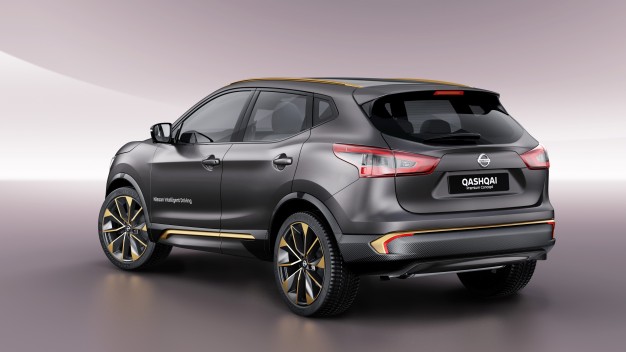
The image shows a Nissan crossover, representing the Nissan vehicles involved in the larger recall story. The recall itself covered a range of models rather than one specific vehicle.
What Was the Nissan Airbag Problem?
The main issue involved the Occupant Classification System, commonly abbreviated as OCS.
Modern vehicles use sensors to determine whether the front passenger seat is occupied and, in some systems, to estimate the occupant’s size or classification.
Why does that matter?
Because the passenger airbag needs to operate differently depending on the occupant situation.
An empty passenger seat does not need the same airbag response as an adult passenger.
A child restraint presents a completely different safety situation.
An adult passenger generally needs the passenger frontal airbag available during a crash when the system is designed to deploy it.
The Nissan problem was that, in certain uncommon seating or entry situations, the system could initially classify an adult passenger as a child or classify an occupied seat as empty.
If the classification remained incorrect when the vehicle was driven, the passenger airbag could remain suppressed.
That meant an adult passenger could potentially lose the protection the frontal airbag was designed to provide in a crash.
Why Was the Nissan Passenger Airbag Problem Serious?
Airbags are supplemental safety restraints designed to work together with seat belts.
If the passenger airbag does not deploy when it should, the occupant may face an increased risk of injury in a crash.
That does not mean every affected Nissan would crash.
It does not mean every crash involving one of these vehicles would result in injury.
It means the vehicle’s safety system could fail to behave as designed during an event when the passenger needed protection.
That’s enough to make regulators and manufacturers pay attention.
And this is exactly why an apparently tiny software or sensor issue can become a massive vehicle recall.
How Many Nissan Vehicles Were Affected?
The numbers depend on whether you’re looking at Nissan’s initial worldwide announcement, the final U.S. recall population or the combined recall campaigns.
In its April 2016 announcement, Nissan said the global campaign could involve approximately 3.5 million Nissan vehicles and 381,000 Infiniti vehicles. The North American numbers were also in the millions.
The final U.S. population for the principal OCS recall was approximately 3.3 million vehicles.
The separate Sentra campaign added another roughly 622,000 vehicles.
Put those two campaigns together and you can see how the number became “nearly 4 million.”
Which Nissan Models Were Recalled?
The recall affected a wide variety of Nissan and Infiniti vehicles.
Depending on model year and production configuration, the affected Nissan vehicles included:
- Nissan Altima
- Nissan LEAF
- Nissan Maxima
- Nissan Murano
- Nissan NV200
- Nissan NV200 Taxi
- Nissan Pathfinder
- Nissan Pathfinder Hybrid
- Nissan Rogue
- Nissan Sentra
Certain Infiniti models were also involved, including the JX35, QX60, QX60 Hybrid, Q50 and Q50 Hybrid.
Certain Chevrolet City Express vans, which were built by Nissan, were also covered.
One important warning: not every vehicle of every model year was necessarily affected. Recall coverage depends on the specific vehicle and VIN.
That is why the correct way to check an older Nissan is by VIN rather than by model name alone.
A 2016 Nissan Altima From the Recall Era
Here is a verified image of a 2016 Nissan Altima. The photograph is available through AutoTrader Canada.
Image credit: AutoTrader.ca.
The Altima was one of the most heavily represented models in the main OCS recall population, which is why it frequently appears in coverage of the campaign.
How Did Nissan Discover the Problem?
This is where the recall story becomes particularly interesting.
The 2016 campaign was not simply a case of Nissan discovering a problem one afternoon and issuing a giant recall the next morning.
The issue had a history.
Nissan had already issued an earlier recall involving the Occupant Classification System. After the earlier repair, additional complaints suggested that the problem had not necessarily been eliminated in every vehicle.
NHTSA responded by opening a Recall Query in 2015.
The agency then upgraded the matter to an Engineering Analysis, allowing investigators to study the system more deeply.
This process illustrates how vehicle recalls can evolve.
A complaint can lead to a review.
A review can lead to a formal investigation.
An investigation can lead to engineering testing.
And engineering testing can eventually lead to a much larger recall.
NHTSA’s Investigation Into the Nissan OCS System
NHTSA’s engineering investigation examined reports that the earlier repair had not always solved the classification problem.
Investigators looked at consumer complaints, vehicle data, crash information and technical evidence.
Testing indicated that certain smaller adults could be misclassified under particular vehicle-entry or seating scenarios.
The issue was especially concerning because the system could sometimes classify an occupied seat as empty.
In that situation, the passenger-airbag indicator might not provide the occupant with the same obvious warning that would occur in some other misclassification scenarios.
That is an important detail.
A problem that announces itself with a warning light is different from a problem that can quietly suppress a safety feature without an obvious warning.
Why the 2016 Nissan Recall Was Not the Same as Takata
This deserves special emphasis because both stories involved airbags and happened around the same period.
The Nissan OCS recall involved occupant classification and airbag-system logic.
The Takata recall involved airbag inflators.
They were separate safety problems.
In the Takata defect, certain airbag inflators could rupture when activated, potentially sending metal fragments into the passenger compartment.
NHTSA eventually recalled tens of millions of Takata airbag inflators in the United States.
The Nissan 2016 OCS recall had a completely different failure mechanism.
So if you are researching a used Nissan today, do not assume that an “airbag recall” description automatically refers to Takata.
Read the actual recall description for your VIN.
Nissan’s Official Airbag Recall Graphic
This Nissan graphic explains that airbag-related recall campaigns can affect different seating positions and systems:

Image credit: Nissan Motor Corporation.
The graphic is useful because it shows why an owner should never guess which airbag problem applies to a particular vehicle. Airbag recalls can involve different components, different positions and completely different failure mechanisms.
What Was the Second Nissan Recall?
The second campaign covered roughly 622,000 Nissan Sentra vehicles.
This defect involved a front passenger seat-belt bracket.
If the bracket was used to secure a child restraint system in the front passenger seat, it could deform.
If that happened, the deformation could affect the passenger-airbag system’s ability to turn the airbag off when the child-restraint situation required it.
This problem was different from the main OCS classification issue.
In the OCS problem, an adult passenger could potentially have the airbag suppressed because the system misclassified the occupant.
In the Sentra seat-belt-bracket problem, the concern was that the airbag might not be deactivated as intended when a child restraint was installed.
Two problems.
One giant headline.
Why Child-Seat Installation Matters to the Passenger Airbag
A passenger airbag is not supposed to operate in exactly the same way for every possible occupant situation.
A rear-facing infant restraint placed in front of an active passenger airbag can be extremely dangerous. That’s why passenger-airbag systems and occupant-classification systems are designed to manage airbag deployment according to the occupant and seat configuration.
This is also one reason child restraints should normally be installed in the rear seat when the vehicle and applicable child-restraint guidance call for it.
If your vehicle has an airbag or occupant-classification recall, follow the manufacturer’s instructions carefully before carrying a child in the front passenger position.
What Did Nissan Do to Fix the Main Recall?
The remedy depended on the vehicle.
For some models, Nissan’s repair involved reprogramming the airbag control unit and the Occupant Classification System control unit.
For other configurations, the OCS electronic control unit needed to be replaced.
Nissan’s service documentation identifies specific procedures for specific vehicle models.
This is another reason recall repairs are not something a regular driver should attempt to diagnose or fix with an internet tutorial.
The repair depends on the vehicle configuration.
The vehicle’s VIN tells the dealer which campaign applies.
Was the Nissan Airbag Recall Repair Free?
Yes.
Nissan’s recall campaign documents state that the specified recall repairs were performed at no cost to the customer.
That’s how a safety recall is supposed to work.
Depending on the campaign, the manufacturer may repair the vehicle, replace a defective component, update software, provide a refund or in rare situations offer another remedy.
NHTSA’s current recall guidance explains that manufacturers must remedy covered safety defects and provide an appropriate corrective action.
How Can You Check If Your Nissan Has a Recall?
The safest and simplest way is to check the vehicle’s 17-character VIN.
NHTSA’s current recall system lets consumers search by VIN and license plate, along with broader searches by year, make and model.
Check your Nissan for an open safety recall on NHTSA.gov.
The VIN is usually visible at the lower-left corner of the windshield.
You can also find it on registration documents and often on your insurance information.
Once the VIN is entered, the database can display whether the specific vehicle has an unrepaired recall associated with it.
Why a VIN Search Is Better Than Searching “Nissan Airbag Recall”
Suppose you own a 2015 Altima.
You search Google and discover six different Nissan airbag recalls.
Which one applies to your car?
Maybe one does.
Maybe two do.
Maybe none of them do.
That’s why model-based articles are useful for background information, but VIN-based searching is the better way to determine whether your specific vehicle is affected.
If you need help understanding the VIN itself, read AutoCarHub’s guide to vehicle identification numbers.
Can You Check a Nissan Recall by License Plate?
Yes. NHTSA’s current recall system also supports license-plate searches for applicable vehicles and states.
This is useful if you don’t have the VIN handy.
However, NHTSA notes that license-plate information comes from state DMV records. If the database shows an older vehicle associated with the plate, the owner may need to update the DMV information or use the VIN for the most direct search.
The VIN remains the best way to identify the exact vehicle.
Does a Nissan Recall Expire?
The recall itself does not expire.
However, NHTSA’s online VIN lookup has limitations.
For example, the public system does not display every safety recall more than 15 years old, except where a manufacturer provides broader coverage. It may also take time for recently announced recalls to be fully represented by VIN.
So an old vehicle that returns no current result is not necessarily a complete historical clean bill of health.
If an older Nissan is important to you, contact Nissan directly with the VIN for additional recall-history information.
What If You Bought the Nissan Used?
That’s exactly when you should check.
A previous owner may have ignored a recall.
A previous owner may not have received the notification.
The vehicle may have changed states.
The owner may have moved without updating the registration.
Or the seller may simply not know about the recall.
The recall follows the vehicle, so the current owner should still check it.
If you’re shopping for a used Nissan, you can also compare pricing using AutoCarHub’s Kelley Blue Book used-car values guide.
Then compare the number with the Edmunds used-car valuation guide.
A vehicle’s value and vehicle’s safety history are two different questions, and you need answers to both before buying.
What if the Dealer Says the Recall Repair Is Not Available?
This can happen.
Sometimes a manufacturer announces a recall before all replacement parts are available.
The reason may be engineering development, testing, production capacity or supply-chain limitations.
The owner may receive an interim notice explaining that the final remedy is still being developed.
In such cases, read the recall instructions carefully.
If the notice says not to drive the vehicle, do not drive it.
If the notice provides an interim safety instruction, follow it.
And keep checking with the dealer until the final repair becomes available.
Could the Nissan OCS Problem Be Detected by a Dashboard Light?
Sometimes, but not always.
That was part of what made the problem concerning.
NHTSA’s investigation found that when the OCS initially classified an adult as a child, an occupant could receive a passenger-airbag warning indication. But in some situations where the occupied seat was classified as empty, there could be no clear indication to the passenger that the airbag had been suppressed.
That meant the absence of an obvious warning did not necessarily mean the system was working perfectly.
And that is a classic example of why recalls are important.
Some safety defects don’t announce themselves loudly.
NHTSA and the Nissan Recall Investigation
The Nissan OCS story provides an excellent real-world example of how NHTSA investigations work.
An earlier recall addressed the problem.
Owners continued to report concerns.
NHTSA opened a Recall Query.
The agency collected additional evidence.
The issue was upgraded to an Engineering Analysis.
Testing was performed.
Investigators examined real-world events.
And the evidence ultimately contributed to the broader 2016 campaign.
That is a long way from the simplified idea that the government simply orders automakers to recall cars whenever complaints reach a certain number.
How Many Complaints Are Needed for NHTSA to Act?
There is no magic number.
NHTSA says it reviews complaints together with other information and evaluates potential defects using a risk-based approach.
That means even a relatively small number of complaints can be important if the reported problem is serious.
Conversely, many complaints about a minor comfort issue may not justify a safety recall.
Safety risk matters more than raw complaint volume alone.
Does NHTSA Initiate Most Recalls?
No.
Most safety recalls are initiated voluntarily by manufacturers before NHTSA becomes directly involved.
That does not mean NHTSA is irrelevant.
NHTSA receives complaints, reviews safety data, investigates alleged defects, enforces federal requirements and monitors recall campaigns.
In appropriate cases, NHTSA can require a manufacturer to conduct a recall.
So there are really two common paths.
Manufacturer discovers a problem → manufacturer voluntarily recalls.
NHTSA investigates a potential problem → agency determines a recall is required.
Why the Nissan Recall Was a Big Deal for Modern Vehicles
The Nissan case showed how modern safety technology can create new kinds of failure.
This wasn’t simply a seat belt breaking in half.
The problem involved sensors, electronic control units, software logic and occupant classification.
Modern vehicles rely heavily on computers.
That means recalls can involve:
- Software logic
- Sensors
- Electronic control units
- Wiring
- Communication networks
- Mechanical components
- Airbag systems
- Driver-assistance systems
A car can look perfectly normal while a hidden electronic problem affects an important safety function.
Nissan Airbag Recall vs. Takata Airbag Recall
Let’s make this distinction extremely clear.
Nissan OCS Recall
The vehicle’s occupant-classification system could incorrectly classify an adult passenger or an occupied seat. This could cause the passenger airbag to remain disabled.
Takata Recall
Certain defective inflators could rupture during deployment and potentially send metal fragments into the passenger compartment.
Two different engineering problems.
Both serious.
Both involved airbags.
But they were not the same recall.
Nissan also had vehicles subject to Takata recalls, so Nissan owners should check their VIN for all outstanding campaigns rather than assuming the 2016 OCS campaign was the only airbag-related issue.
Why the Takata Connection Still Matters for Nissan Owners
NHTSA continues to maintain a Takata recall program because some affected vehicles still require repairs.
Nissan’s current recall information also warns owners of certain older vehicles with unresolved Takata inflator recalls.
Some older Nissan models have carried particularly urgent “do not drive” warnings for unrepaired Takata airbag inflators.
That makes the VIN check even more important for people who own or purchase older Nissan vehicles.
What Should You Do If Your Nissan Has an Airbag Recall?
Don’t ignore it.
The correct response is surprisingly simple.
- Check the recall number and description.
- Read all safety instructions.
- Check whether the manufacturer has issued a “do not drive” warning.
- Contact an authorized Nissan dealer.
- Ask when the remedy is available.
- Schedule the repair.
- Keep the repair paperwork.
If the remedy is unavailable, ask what interim safety instructions apply.
Don’t rely on a random social-media post for advice about whether an airbag recall is safe to ignore.
Should You Drive an Affected Nissan?
The answer depends on the specific recall.
Not every airbag recall has the same risk profile.
Some recalls come with “do not drive” instructions.
Others allow the vehicle to be driven while waiting for parts.
You should follow the exact instructions associated with your vehicle’s current recall.
Do not assume that because one Nissan airbag recall allowed normal driving, another Nissan airbag recall does too.
What If You Already Paid for a Repair?
Keep the invoice.
That advice sounds boring until it saves you money.
Depending on the recall and circumstances, owners may be eligible for reimbursement for certain repairs completed before the recall was announced if the repair addressed the recalled defect.
Contact Nissan using the information in the recall notice and provide your repair documentation.
Receipts are much more useful when they still exist.
What If the Recall Was Already Repaired?
NHTSA’s VIN system is designed to show unrepaired recalls.
Therefore, a previously completed recall may not appear as an open recall in the database.
This is generally good news.
It means the vehicle’s recall remedy has already been recorded as completed.
However, if you want the complete recall history of an older used Nissan, you can ask the manufacturer or dealer for additional information.
Why You Shouldn’t Rely Only on Google to Check a Nissan Recall
Search engines are great for learning the background of a recall.
They are not the best tool for identifying the exact recall status of your specific vehicle.
Search for:
“2015 Nissan Altima airbag recall.”
You’ll get articles.
Search your VIN.
You’ll get vehicle-specific information.
That difference is huge.
Use Google to understand.
Use NHTSA to verify.
How Recall History Can Affect a Used Nissan Purchase
Imagine you find a used 2016 Altima for an attractive price.
Before negotiating, check:
- VIN
- Open safety recalls
- Service history
- Accident history
- Mileage
- Vehicle condition
- Market value
Then compare the asking price with more than one valuation guide.
AutoCarHub’s Edmunds versus other pricing guides comparison explains why it can be useful to compare several sources rather than blindly trusting one price estimate.
You can also review Edmunds True Market Value information before negotiating.
And if you’re selling a Nissan instead, Kelley Blue Book trade-in values can provide a useful benchmark.
How Often Should You Check for Nissan Recalls?
NHTSA recommends checking recalls twice a year.
That is a very manageable habit.
You don’t need to turn it into a weekly obsession.
Twice a year is enough to keep the vehicle on your radar.
You can also use NHTSA’s free SaferCar app to receive alerts about safety recalls associated with vehicles or equipment you have entered.
That is especially useful for households with multiple vehicles.
What Other Equipment Should You Check?
NHTSA’s recall system isn’t just for cars.
You can also search for certain recalls involving:
- Car seats
- Booster seats
- Tires
- Motorcycles
- Vehicle equipment
That’s particularly useful for families.
Imagine checking the family SUV but forgetting that the child seat inside it has its own safety recall.
One tiny check can cover more than one potential risk.
How the Nissan Recall Story Changed Over Time
The 2016 AutoCarHub article was written when the recall was new.
At that time, the most important question was:
“What is going on with these Nissan airbags?”
Now, the more useful questions are:
Was the recall completed?
Was the vehicle repaired?
Was the vehicle subsequently subject to another recall?
And does my specific VIN still have an open campaign?
That is why updating an old recall article is valuable. The history does not change, but the owner’s practical questions do.
More AutoCarHub Resources for Used Nissan Owners
If you’re researching a used Nissan, start with the VIN guide to understand the vehicle’s 17-character identity.
Then use Kelley Blue Book used-car values to get a pricing benchmark.
Compare that with Edmunds used-car values.
If you’re considering a trade-in, see Kelley Blue Book trade-in values.
For another look at valuation methodology, check Edmunds car valuation.
And if you’re shopping for a new vehicle rather than a used Nissan, AutoCarHub’s new-car price research guide can help you compare MSRP, pricing sources and dealer offers.
Frequently Asked Questions About the Nissan Nearly 4 Million Recall
Why did Nissan recall nearly 4 million cars?
Nissan issued two major campaigns in 2016. The larger recall involved the passenger Occupant Classification System, which could incorrectly classify an adult passenger or an occupied seat. A separate recall involved approximately 622,000 Sentra vehicles and a passenger-seat belt bracket that could affect airbag deactivation when securing a child restraint.
How many Nissan vehicles were affected by the main airbag recall?
The final U.S. population for the main OCS campaign was approximately 3.3 million vehicles, while Nissan’s initial worldwide announcement covered millions of Nissan and Infiniti vehicles.
Which Nissan models were affected?
Certain Altima, LEAF, Maxima, Murano, NV200, Pathfinder, Rogue and Sentra vehicles were included. Certain Infiniti JX35, QX60, QX60 Hybrid, Q50 and Q50 Hybrid vehicles were also involved, along with certain Chevrolet City Express vans built by Nissan.
No. The 2016 Nissan OCS recall and the Takata inflator recall were separate safety issues. Nissan vehicles were also affected by Takata recalls, but the two campaigns should not be confused.
Could the Nissan passenger airbag fail to deploy?
Yes. Under certain circumstances, the Occupant Classification System could incorrectly classify an adult passenger or an occupied seat and potentially suppress the passenger frontal airbag.
Was the Nissan recall repair free?
Yes. The affected Nissan recall repairs were provided without charge to vehicle owners covered by the campaigns.
How can I check if my Nissan has an airbag recall?
Use the vehicle’s 17-character VIN on the official NHTSA recall website. You can also use Nissan’s current recall resources.
Does a Nissan recall expire?
NHTSA says recalls themselves do not expire. However, its public VIN lookup has limitations for very old recalls and some recently announced campaigns.
Can I check the recall status of a used Nissan?
Yes. The recall follows the vehicle, so a used Nissan can still have an open safety recall. Enter the VIN into NHTSA’s recall database before purchasing the vehicle.
What if the dealer says the recall repair is not available?
Ask the dealer when parts are expected and what interim safety instructions apply. Some recalls are announced before a final remedy is available.
Should I drive a Nissan with an airbag recall?
It depends on the specific recall. Follow the instructions associated with your VIN. If the manufacturer or NHTSA says “do not drive,” do not drive the vehicle until the specified action is completed.
The Final Verdict on the Nissan Nearly 4 Million Airbag Recall
The Nissan “nearly 4 million cars” recall was actually the combination of two major safety campaigns, with the larger one involving the Occupant Classification System and the smaller one involving a passenger-seat belt bracket on certain Sentras.
The larger recall affected millions of Nissan and Infiniti vehicles because the OCS could, under certain circumstances, incorrectly classify an adult passenger or an occupied front passenger seat.
If the system classified the seat incorrectly, the passenger frontal airbag could potentially be suppressed.
That is serious because an airbag is designed to provide supplemental protection during a crash.
The story also shows how an automotive recall can develop over time.
An earlier recall was issued.
Owners continued to report problems.
NHTSA opened a Recall Query.
The investigation was upgraded to Engineering Analysis.
Testing and engineering work continued.
And the larger 2016 recall followed.
The second campaign, covering roughly 622,000 Sentras, involved a different problem with the passenger-seat belt bracket and child-restraint installation.
And none of this should be automatically confused with Takata.
Takata was a separate airbag-inflator defect that affected tens of millions of vehicles across many manufacturers.
For Nissan owners, the practical lesson is simple:
Do not rely on an old article, a social-media post or the model name alone.
Use your VIN.
Check NHTSA.
Check Nissan.
If there is an open recall, arrange the remedy.
And if you’re buying a used Nissan, perform the recall check before you negotiate the price—not after you have already handed over the money.
A clean-looking car can hide an unresolved safety issue.
A 17-character VIN can reveal it.
That’s why checking recalls is one of the smartest—and easiest—things a Nissan owner or used-car buyer can do.

Add comment